Enhance Your Comfort and Independence at Home
Practical changes can make a big difference to your comfort and safety at home. Under the government’s Support At Home program, you may be eligible for extra funding to access Assistive Technologies (AT) and Home Modifications (HM) - equipment and improvements that may help you live more independently.
What is the Support at Home Assistive
Technology & Home Modification Scheme?
The Assistive Technology and Home Modifications (AT–HM) Scheme is part of the Support at Home program. It provides separate, short-term, time-limited funding for essential aids, equipment, and home changes that support safety, comfort and independence.
It is not automatically included in your Support at Home Classification. Instead, you must be approved separately through the Aged Care Assessment Team (ACAT) or the My Aged Care assessment pathway.
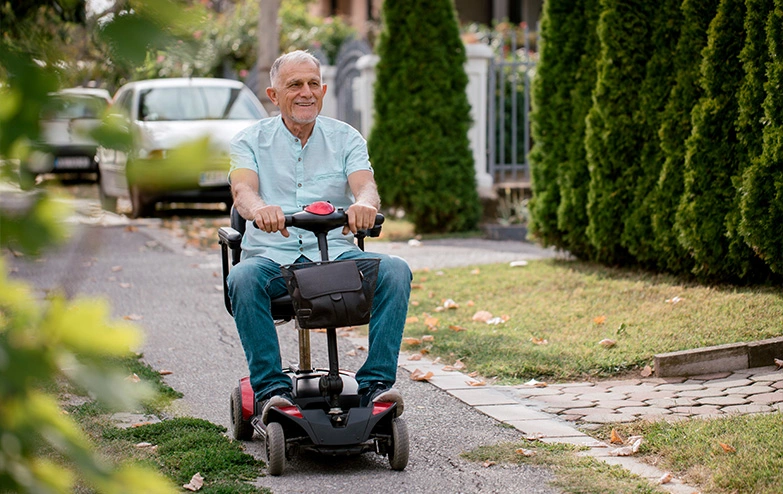
- Assistive Technology (AT): portable aids or equipment that support your daily activities - from walking frames and shower chairs to adjustable beds and sensor lights.
- Home Modifications (HM): physical changes to your home environment - like ramps, grab rails, widened doorways, or accessible bathrooms.
- AT-HM funding is separate from your main Support at Home classification and can be approved individually or together.
- Depending on your assessed needs, you might be granted either AT funding or HM funding separately, or both at the same time.
- You’ll be assigned a funding level (low, medium or high) for each, based on your needs.
- Funding is time-limited - usually 56 days from approval - so it’s important to act quickly once you’ve been approved because your funding could be withdrawn.
Anyone assessed and approved for Support At Home may be assessed for additional AT-HM funding through My Aged Care. You can also apply separately if your needs change - for example, if your mobility decreases or your home environment becomes unsafe.
Assistive Technology can help you manage daily tasks, move safely, and maintain independence. See funding and inclusions examples:
| Level | Examples of AT | How it Helps |
|---|---|---|
| Low Risk |
|
Improve safety and reduce fall risk |
| Under Advice |
|
Improve mobility and comfort |
| Prescribed |
|
Support complex or high-care needs |
Home modifications make your environment safer and easier to live in. Below are examples of funding levels and what they typically include:
| Level | Examples of Home Modifications | How it Helps |
|---|---|---|
| Low Risk |
|
Improve safety in key areas |
| Under Advice |
|
Support safe mobility and access |
| Prescribed |
|
Enable longer-term independence and more comprehensive support |
Understanding Your Funding Level
* Your funding level indicates how much support is available, not what approvals are required to purchase an item.
** Funding amounts are determined by the government and may change.
What Assistive Technologies or Home Modifications Require an Assessment?
| Support Level | Description | Example uses | Requires OT Assessment or prescription? |
|---|---|---|---|
| Low Risk Items | Simple aids that are safe to use without a clinical prescription | Non-slip mats, dressing aids, basic kitchen aids | Usually not |
|
Under Advice (we need to confirm the item is right for you) |
Equipment where advice from a provider or allied health professional is recommended to ensure the most appropriate item is selected, installed or used effectively | Walking aids, shower chairs, raised toilet seats | Often yes* |
|
Prescribed Supports (cannot be received without Allied Health assessment with report and recommendation) |
More complex equipment or home changes that must be clinically assessed | Bathroom modifications, ramps, major mobility equipment | Almost always** |
** High funding doesn’t necessarily mean you’ll need an OT assessment for all the items you spend your funds on. Talk to us for assistance in planning your AT-HM funds.
If you’re still unsure and need further guidance, please reach out to our expert team.
What are My Next Steps to Receive AT-HM?
Select your current stage below to read more about what to do next.
I haven’t yet applied for additional AT-HM funding support
You must already have an approved Support at Home classification (levels 1 – 8).
Contact My Aged Care (MAC) to ask for an ACAS assessment to determine the additional support you may need and therefore, your level of additional funding required. The ACAS assessor will help identify whether AT or HM could support your independence, safety, or wellbeing at home.
You may be eligible if:
- You have a Support at Home classification but no AT-HM funding yet, or
- Your current equipment or home setup no longer meets your needs, or
- You’ve been recommended equipment/modifications by a qualified clinician.
I’ve applied for AT-HM funding support and I’m waiting to be assessed
My Aged Care will arrange for an Occupational Therapist (OT) or other qualified assessor to evaluate your needs and risks.
- Low-risk items (e.g. shower chair, walking stick, non-slip mat) may not require an OT assessment.
- Medium or high-risk items (e.g. ramps, grab rails, lift chairs, bathroom modifications) will require an OT report.
Your assessor will recommend either:
- Assistive Technology funding,
- Home Modifications funding, or
- Both, with a Low, Medium, or High funding level.
My needs have changed and I want to get reassessed
If you’re an existing Support at Home recipient, you can get reassessed or you can reapply to My Aged Care (MAC) at any time.
If you already receive Support at Home services and your needs have changed:
- Speak with your Benetas Care Partner about a new assessment for AT-HM support.
- Your Care Partner can help you submit a request through My Aged Care.
- You may be asked to complete a new OT assessment or provide updated clinical reports.
I’m Approved and have been notified – I need to select a provider
If approved, you’ll be placed on a waiting list for your funding to be assigned. Once your funding is assigned, you’ll receive a separate AT-HM funding letter from My Aged Care. This letter outlines:
- The funding type (AT, HM, or both)
- The risk/funding level (Low, Medium, High)
- The total amount approved
- A 56-day expiry period to start using the funds
Once approved, you can ask Benetas to help you:
- Source or install the approved equipment, and
- Make sure it meets safety and quality standards.
If you sign with Benetas within the 56-day window, your funding can be secured while your care plan is finalised.
I have additional funding and I want to maximise my supports
Using Your AT-HM Funding Wisely
Your funding is time-limited and separate from your Support at Home budget. To make the most of it:
- Don’t delay – secure your funds. Because AT-HM funds expire after 56 days, even if you’re waiting for a Support at Home package, it’s best to sign with a provider early so your funds are held while your plan is finalised.
- Prioritise what keeps you safe and independent. Consider supports that prevent falls, reduce pain, or help you move easily around your home.
- Utilise your Support at Home or CHSP Allied Health funding to cover OT assessment costs if needed.
- Combine AT and HM for greater benefit. If you’re eligible for both types of funding, consider pairing them. For example, installing grab bars and purchase a shower chair together – they work best as a system to make bathing safer and easier.
- If your funding is low and you are waiting for your Support at Home package to come through, you could consider starting with low-risk, high impact items you can use immediately that don’t necessarily require peripheral care support ongoing.
- Collect quotes and keep receipts. Your Care Partner can help you understand the government-approved list of included and excluded items. They can assist you to collect quotes for the included items and get them signed off for purchase. Once purchased, you should retain your receipt to show approved use of funds which ensures transparency and makes it easier to request future funding if your needs change.
- Stay in touch with your Care Partner. As your health or mobility changes, your equipment needs might too. Your Care Partner can guide you on next steps and advocate on your behalf.
- Plan ahead. Think about what might help you over the next 6 – 12 month. Even small upgrades like better lighting or easier grip-handles can make a big difference and could prevent costly injuries down the track.
What Items are Included and Excluded from the scheme?
For a full, comprehensive and updated list of government-approved included and excluded items, visit the Government’s website.
Ready to Get Started?
Let's help you take the next step toward a safer, more comfortable home.
Or call us on 1300 236 382
Let’s find the perfect fit
We want to give you the most relevant information to fit your needs. Choose which step of the Home Care process you’re at and we will provide the information that is relevant to you.
English is not my mum’s first language, and we struggled to navigate the government subsidy system with her, until Benetas came along.